How quality data annotation services enhance autonomous vehicle performance
Autonomous vehicles(AVs) are at the forefront of technological innovation,...
1. what is data annotation?
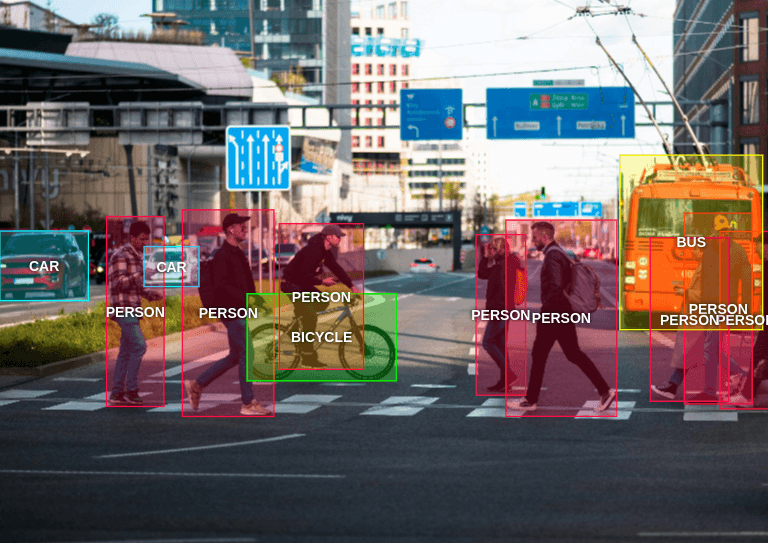
Data annotation refers to the process of labeling data such as images, video, or sensor data so that machine learning models can recognize and understand patterns within that data. in the context of autonomous vehicles, data annotation involves labelling objects like pedestrians, vehicles, traffic signs, road lanes, and other relevent features to train AV systems.
- Bounding boxes: Labeling objects with rectangular boxes to define their position and size within an image.
- Semantic segmentation: Assigning each pixel in an image to a specific category, providing detailed object recognition.
- Lidar annotation: Labeling 3D point cloud data captured by LiDAR sensors to identify objects and their spatial dimensions.
- Video annotation: Annotating moving objects in video sequences to understand dynamic environments and predict object behavior.
2. importance of quality data annotation in autonomous vehicles:
- Enhancing object detection and recognition Precision in object identification: high-quality annotations ensure that machine learning models can accurately detect and classify objects in real-time, crucial for safe navigation.
Improved decision-making: annotate data helps AV systems to make informed decisions based on the precise identification of road signs, traffic signals, and other environmental elements.
- Training robust machine learning models Diverse and comprehensive datasets: quality annotations on diverse datasets allow AV systems to learn from various scenarios, improving their ability to handle different driving conditions.
Reducing false positives/negatives: accurate data annotation reduces errors in object detection, minizing the chances of false positives or false negatives.
- Enabling Complex Environment Understanding Handling edge cases: properly annotated data enables AV systems to recognize and react to rare or complex scenarios, such as unusual traffic patterns or unexpected obstacles.
Contextual awareness: annotated data provides context, allowing AVs to understand relationships between objects, such as the difference between a moving pedestrian and a stationary one.
- Supporting real-time performanceFaster processing and response: well-annotated data allows AV systems to quickly process information and make split-second decisions, essential for real-time performance.
Minimizing latency: accurate annotations help streamline the data processing pipeline, reducing latency and improving the vehicle’s overall responsiveness.
3. challenges in data annotation for autonomous vehicles
- Complexity and volume of data High data volume: autonomous vehicles generate massive amounts of data from various sensors, requiring extensive annotation efforts.
Complex scenarios: annotating complex driving scenarios, such as crowded urban environments or adverse weather conditions, demands high expertise and precision.
- Ensuring consistency and accuracy Annotation quality control: maintaining consistency in annotations across large datasets is challenging, especially when multiple annotators are involved.
Human error: the manual nature of data annotation can lead to errors, such as incorrect labels or missed objects, impacting model performance.
- Evolving standards and technologies Changing industry standards: the repidly evolving AV industry means that annotation standards and requirements may change, requiring continuous updates to datasets.
Integration with new technologies: incorporating data from emerging sensor technologies, such as advanced LiDAR or readar systems, necessitates new annotation techniques and
- Scalability and cost Resource intensive: high-quality data annotation requires significant time, effort, and resources, leading to high costs, especially when scaling up for large datasets.
Balancing cost and quality: striking a balance between cost-efficiency and maintaining high annotation quality can be challenging for organizations developing AV systems.
Share this article