Written guidelines before volume
Class definitions, edge cases, and rejection criteria agreed and documented before bulk work begins.
Data Services
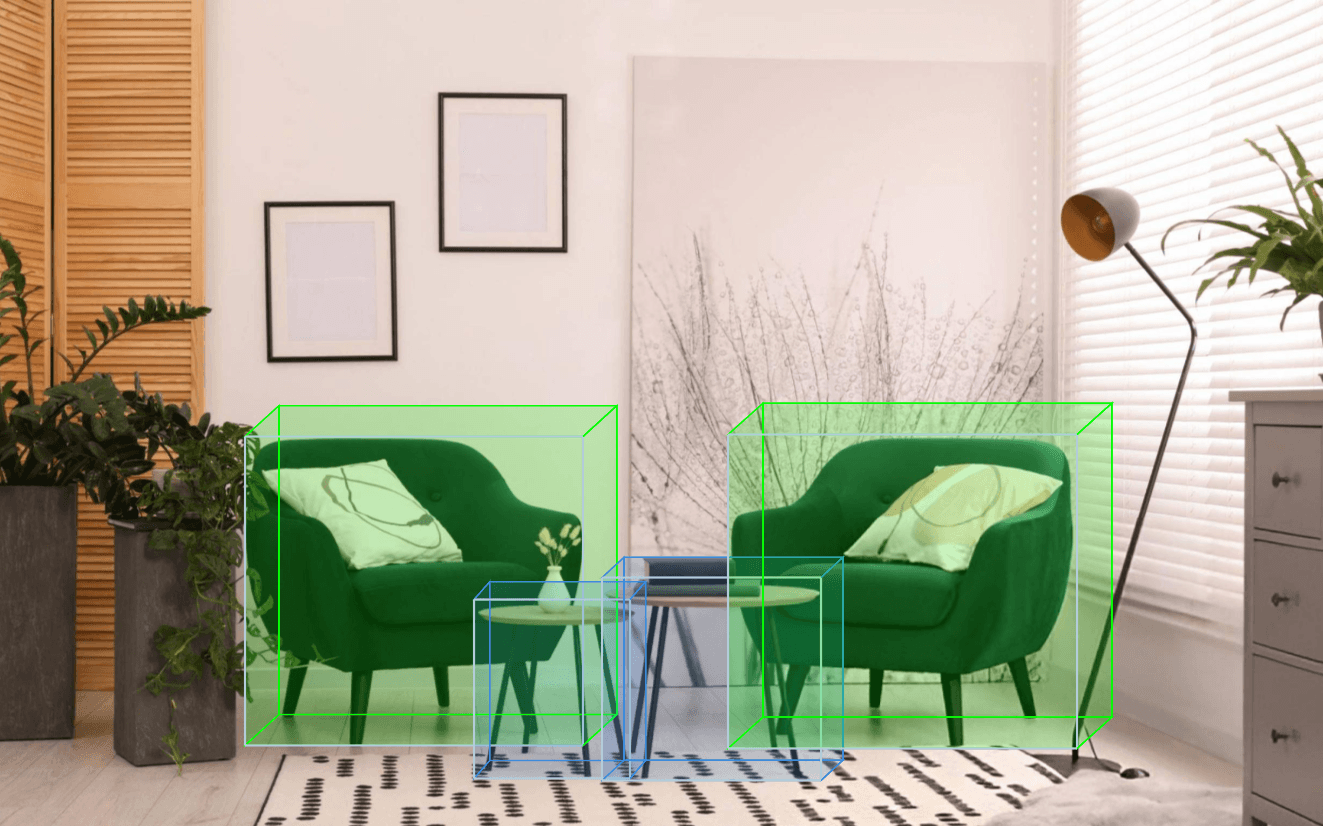
Three-dimensional extents and orientation for objects in a scene, where depth and heading matter to the model.

Overview
Cuboid annotation captures dimension and orientation, not just position. It matters for anything that needs to reason about space - vehicle heading, clearance, stacking.
This is slower and more error-prone than 2D work, so it carries a heavier review pass in our process.
What you receive
Typical stack
Capabilities
Class definitions, edge cases, and rejection criteria agreed and documented before bulk work begins.
Annotators calibrated against a reference set, with agreement measured before they join a project.
A second annotator reviews sampled output, with rework triggered on defined error thresholds.
COCO, YOLO, Pascal VOC, or a custom schema - exported to match your existing training pipeline.
Related
Ingestion, transformation, and quality checks that turn scattered operational data into something a model or a report can rely on.
Read morePixel-level class labels across an image, for models where a boundary drives a measurement rather than a bounding box.
Read moreRectangular object annotation for detection and counting tasks, at the volumes detection training actually needs.
Read moreSend us the shape of the problem and we'll come back with a scoped approach, a timeline, and an honest read on what's achievable.